
Feather hair extensions are decorative strands of real or synthetic feathers attached to small sections of natural hair using a micro-bead or micro-link mechanism, without glue, heat, or chemical bonding. Each feather tip is threaded alongside a small strand of the wearer’s own hair through a silicone-lined bead, which is then gently clamped shut with pliers to create a secure but removable attachment. The result is a lightweight, washable, and heat-styleable accent that moves with the hair rather than sitting on top of it.
The category has moved well beyond its early-2010s festival phase. In late 2025, a single celebrity appearance—Kim Kardashian wearing feathers in her hair at a premiere in Brazil—triggered a measurable spike in consumer interest, and online searches for feather hair accents have been climbing since.
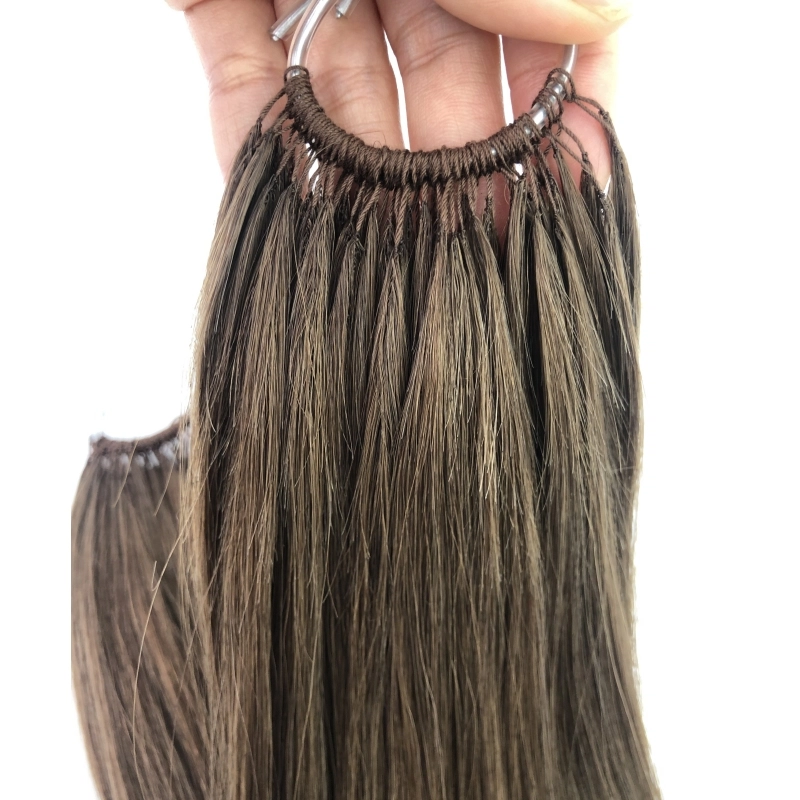
This image shows the roots of the feather hair extensions; we can see them attached to the rings.
Feather extensions attach at a single point roughly the size of a grain of rice, making them nearly undetectable even when the hair is pulled back into a ponytail or updo. Unlike tape-in or weft methods that create a visible seam, the feather-tip format distributes virtually no bulk at the attachment site.
Why it matters: The invisibility is not merely aesthetic. A smaller attachment footprint means less tension on any single strand of natural hair, which is the primary driver of traction-related breakage in extensions.
Each individual feather strand weighs approximately 0.1–0.3 g. A full-head installation of feather extensions totals roughly 30–50 g, compared with approximately 150 g for conventional braided extensions. Feather crochet and micro-link feather formats are consistently described by wearers as “very soft” and “weigh nothing”.
Why it matters: Weight is the hidden cost of most extension methods. Feather extensions are one of the few categories suitable for fine, fragile, or thinning hair precisely because they do not impose a cumulative load on the follicle.
Installation requires only a looping tool, a silicone-lined micro-bead, and pliers. There is no keratin bond softened with heat, no adhesive tape, and no sewing. The feather is secured mechanically, not chemically.
Why it matters: This eliminates the two most common sources of extension-related damage: adhesive residue and heat-accelerated bond degradation. It also means the process is genuinely reversible at home without solvent or professional removal.
Real rooster feather extensions are washable, brushable, curlable, straightenable, and blow-dryable. They are heat-safe up to approximately 400–450°F (200–230°C), provided direct heat is not applied to the micro-bead itself. The blend rate with natural hair is reported at over 96%, meaning the feather integrates visually rather than reading as a separate accessory.
Why it matters: A styling tool that cannot survive a blow-dryer or a curling iron has limited real-world value. The heat tolerance of quality feather extensions places them in the same styling workflow as the wearer’s own hair.
The feathers themselves are reusable across multiple installations. The micro-bead is the only component that should be replaced between uses, because a crimped bead loses its structural integrity once opened. Beads are inexpensive and widely available.
Why it matters: The total cost of ownership over several months is substantially lower than the upfront price of a single pack might suggest.
The following table consolidates the relationship between common feather extension specifications and the concrete advantage each design choice delivers. It is organized around the variables a prospective buyer or installer is most likely to compare.
| Specification Variable | Common Options / Range | Design Feature | Resulting Advantage | Evidence / Note |
|---|---|---|---|---|
| Feather length | 8–12 in (20–30 cm); 10–12 in (medium); 12–14 in (long); 14–16 in (super long); 16 in+ (mega long) | Tapered, natural feather shape | Medium (10–12 in) is the most versatile for everyday wear; longer lengths suit statement looks and below-shoulder hair | Stylists recommend starting with 10–12 in for ease of blending |
| Feather quantity per extension | Single feather; 3–7 bonded feathers; 50-piece mixed packs | Bundled or single-strand format | Single feathers create subtle accents; 3–7 bonded feathers deliver a visible streak without multiple attachment points | Bonded tips reduce bead count while increasing color impact |
| Feather type / material | 100% real rooster feather; synthetic; “feather-tip” human hair | Natural quill vs. tapered synthetic tip | Real rooster feather offers the most authentic movement and heat tolerance; feather-tip human hair prioritizes seamless blending with natural hair texture | “Feather-tip” refers to attachment preparation, not material |
| Attachment method | Silicone-lined micro-bead (micro-link); clip-in; crochet/loop method | Mechanical crimp vs. clip vs. looped base | Micro-bead is the most secure and longest-wearing; clip-in is instant and commitment-free; crochet suits dreadlocks and protective styles | Micro-bead is the industry-standard feather attachment |
| Color palette | Natural earth tones (brown, beige, grizzly, blonde); fantasy colors (pink, blue, violet, turquoise) | Dyed or natural rooster plumage | Natural tones blend for understated everyday wear; fantasy colors create festival and creative statement looks | Fade-resistant dyes are specified on premium products |
| Wear duration | 4–6 weeks (typical with care); 4–6 months (premium real feather, maintained); 6–8 weeks (crochet feather install) | Bead security + feather durability | Longer wear correlates with bead quality and aftercare; feathers can be removed and repositioned as hair grows | Wear-time ranges reflect differences in product grade and maintenance |
| Price band (per unit / pack) | $2–6 for 5 loose feathers; $14–20 for 5–6 bonded feathers with beads; $36+ for 20-feather kits with tools; $70+ for XL multi-packs; $75–136 for 200-strand human-hair sets | DIY kit vs. salon-installed | Entry cost is low; the per-wear cost drops sharply with reuse; salon installation adds labor but reduces first-time error risk | Price varies by feather type, quantity, and inclusion of tools |
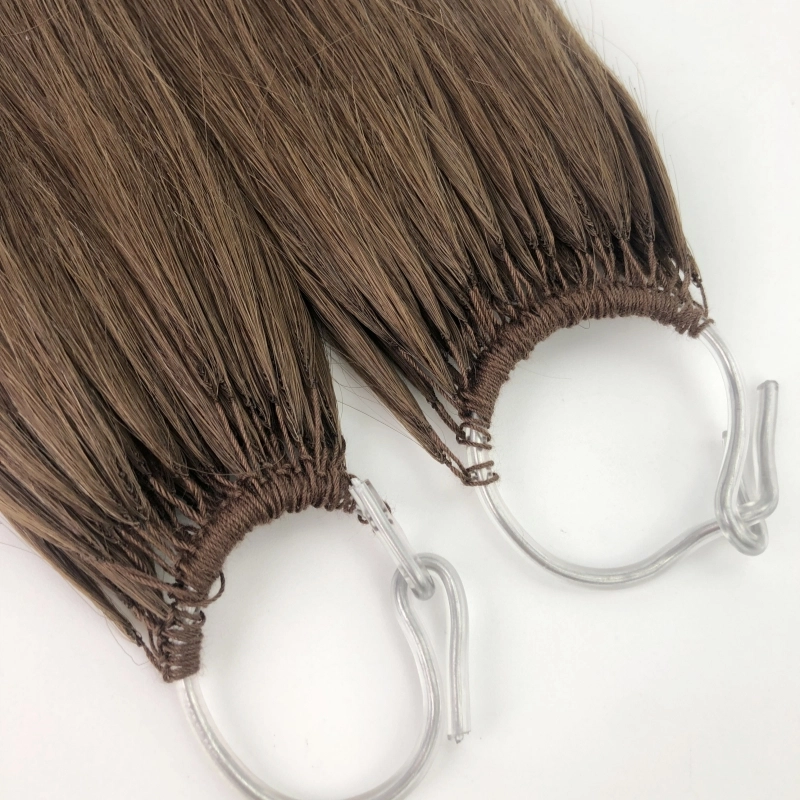
This image shows the roots of the feather hair extensions; we can see them attached to the rings.
The most visible use case remains the festival environment. Feather extensions in fantasy colors—electric blue, turquoise, hot pink, violet—are explicitly positioned for festival outfits, concerts, and photo shoots, where the goal is high-impact color without a permanent dye commitment. The clip-in format is particularly relevant here: it can be added in minutes before an event and removed the same night.
Natural-tone feather extensions in fawn brown, grizzly, and soft blonde function as an understated accent for everyday boho looks. They are designed to enhance braids, layered cuts, and beach waves rather than dominate the hairstyle. A single feather placed behind the ear or layered into a loose braid is the lowest-commitment entry point into the category.
Feather accents appear in wedding styling, editorial photoshoots, and creative events where a soft, organic texture is desired. The lightweight construction means they do not interfere with intricate updos, and the heat tolerance allows them to be curled or straightened to match the rest of the styled hair.
This is a use case that distinguishes feather extensions from most other extension categories. Because the attachment is point-based and the total weight is minimal, feather extensions are suitable for clients with very fine, fragile, or thinning hair who cannot tolerate standard extension methods. The feather adds a visible accent or a touch of mid-length fullness without the cumulative tension of wefts or tape panels.
Feather extensions are washable, quick-drying, and require no special aftercare beyond gentle cleansing and avoiding heavy conditioner near the bead. For travel and summer styling, they deliver a color or texture change that survives swimming, humidity, and daily styling without the maintenance schedule of a salon-installed extension system.
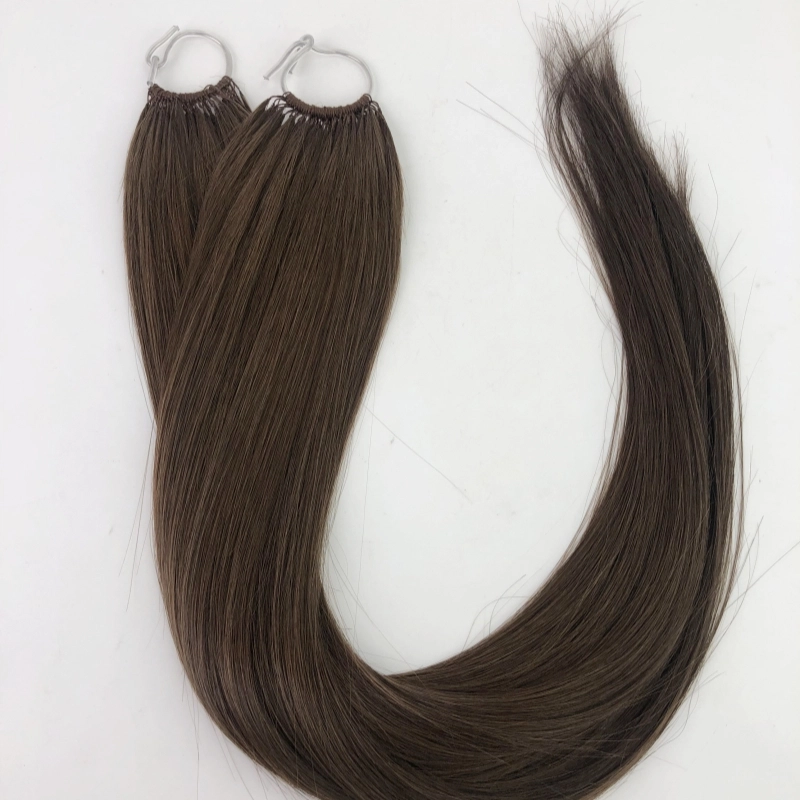
This image shows the overall appearance of 14-inch brown feather hair extensions.
The following steps describe the micro-bead (micro-link) method, the most widely used and durable feather extension installation technique. The same core sequence applies whether the feather is a single accent or part of a multi-feather bonded set.
Wash and fully dry the natural hair. Create a clean horizontal parting in the area where the feather will sit—typically a few inches below the crown or behind the ear for a discreet placement, or higher for a visible accent. Use a clip to hold the upper section of hair out of the way. The section of hair you select for attachment should be small enough that the bead and feather can close comfortably around it—roughly the diameter of a pencil or less.
What to watch for: Do not over-load the bead. A bead that is forced shut over too much hair will not hold securely, and a bead that is too loose will slide down the strand.
Slide a silicone-lined micro-bead onto the loop of the threading tool. The silicone lining serves two functions: it grips the hair and feather more reliably than a bare metal bead, and it cushions the attachment point against the natural hair.
Hook the selected small section of natural hair into the loop of the tool. Carefully slide the bead up the loop and onto the hair, pulling the hair through the bead until the bead sits close to the scalp but not tight against it. A comfortable placement allows a millimeter or two of movement; a bead pulled flush to the scalp creates unnecessary tension.
With the bead positioned on the hair, slide the tied end or tip of the feather extension into the same bead, alongside the natural hair. The feather should face the direction you want it to lay. If you are using a bonded multi-feather extension, insert the bonded tip; if using a single feather, insert the quill end.
Use extension pliers to gently crimp the bead closed. Squeeze firmly but not abruptly—the goal is to flatten the bead around the hair and feather without cutting into either. A properly crimped bead holds securely and can later be opened by squeezing it in the opposite direction with the pliers.
Trim the feather tip if it extends awkwardly beyond the surrounding hair, or layer the feather into the natural hair with a comb. Repeat the process for additional feathers, spacing them at least one inch apart to avoid clustering tension on nearby strands. For a subtle look, one or two feathers are sufficient; for a fuller accent, stagger lengths and colors.
To remove the extension, clamp the bead with pliers in the opposite direction (side to side) until it opens, then slide the feather out without pulling or tugging. Discard the used bead—a crimped bead should not be reused—but the feather itself can be reinserted with a fresh bead.
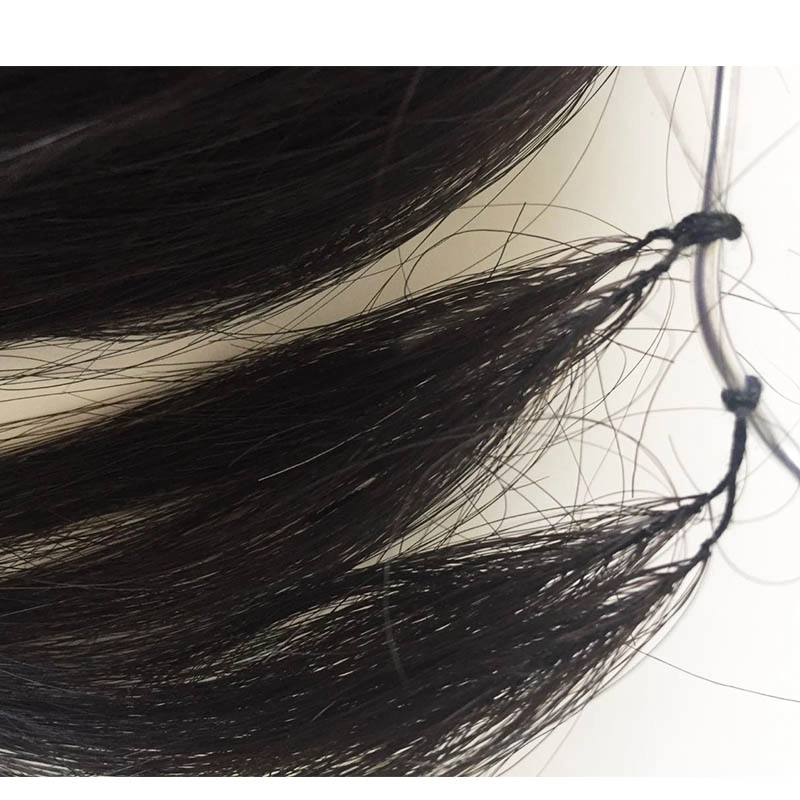
This image focuses on the base of an individual feather hair extension, allowing us to see its structure.
Feather hair extensions occupy a distinct position in the extension landscape: they are the category that prioritizes low weight, zero chemical bonding, and reversibility over maximum length or volume. The specification table shows that the same fundamental design—a tapered feather secured by a silicone-lined micro-bead—can be adapted across lengths from 8 to 16+ inches, color palettes from natural grizzly to festival fantasy, and price points from a few dollars for a single accent to over $100 for a multi-strand human-hair set. The use cases confirm that the category is not limited to festivals: fine-haired wearers use feathers for accent volume, bridal and editorial stylists use them for organic texture, and everyday wearers use them as a temporary color or movement accent with no salon commitment. The installation process itself is genuinely accessible—six steps, four tools, no heat or glue—but the quality of the result depends on bead discipline: the right amount of hair, the right crimp tension, and the willingness to replace the bead rather than reuse it. For a reader searching “how to put feather extensions in your hair,” the evidence points to a conclusion that is both practical and reassuring: this is one of the few extension methods that can be learned in a single session, maintained at home, and removed without residue or regret.
Dont hesitate to Contact EMEDA Hair Factory:
 WhatsApp: +8618562611116
Email: sales02@emedahair.com