
The fastest-growing segment of the tape-in category is not about longer hair or wider shade ranges—it is about a bond thin enough to disappear. Invisible skin weft tape-ins are now the default recommendation for clients whose primary question is not “how much length can I get,” but “will anyone be able to see it.”
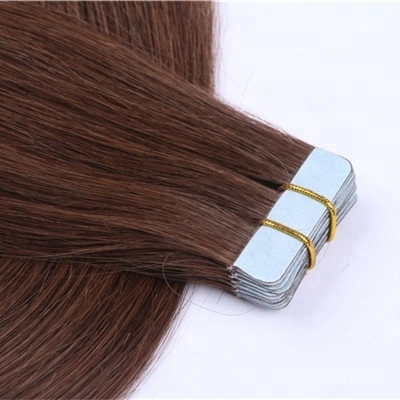
This image shows the side of the tape-in hair extensions that features the adhesive strip.
The invisible skin weft tape-in is frequently described as “thinner tape,” but the distinction is structural, not incremental. A standard tape-in uses a fabric or sewn weft edge finished with adhesive; a skin weft replaces that edge with a translucent polyurethane membrane into which hair is injected or bonded. The practical consequences cascade from that single design choice: less material at the root means less to disguise, which matters most where concealment is hardest—the hairline, the part, and the crown.
The table below maps the core specifications and design decisions of the invisible skin weft tape-in to the advantages they produce for both the wearer and the stylist performing the service.
| Specification / Design Element | Typical Range / Options | Advantage in an Invisible Skin Weft Tape-In |
|---|---|---|
| Ultra-thin translucent PU / skin-weft base | Approximately 2.8 g per weft; skin-tone-translucent membrane rather than a fabric edge | Reads as scalp rather than as a strip; produces a flatter, more “invisible” finish than thicker traditional tape-in wefts, especially under direct light and in a parting |
| Weft width and pack configuration | 4 cm wide per weft; 10 wefts per pack (5 sandwiches); 25–28 g per pack depending on brand | Standardized 4 cm width allows precise sectioning and predictable placement; 5-sandwich packs give the stylist modular control over density without opening excess hair |
| Length and weight combinations | 18 in / 28 g (2.8 g per weft); 20 in / 25 g; 14–30 in ranges available across brands; 50 g packs commonly offered in 20-piece formats | The lighter gram weight (2.8 g) sits at the low end of semi-permanent methods, reducing load on natural hair—a critical advantage for fine or fragile hair; longer and heavier options build length and density for medium-to-thick hair |
| Weight-per-weft and total load management | 2.8 g per individual weft; full-head usage typically 2–3 packs (50–75 g) for thin hair, 3–6 packs (75–150 g) for medium hair, 6–8 packs (150–200 g) for thick hair | At 2.8 g per attachment, the invisible skin weft tape-in is one of the least damaging semi-permanent options by weight; damage is further minimized because the thin bond reduces tension concentration at the root |
| Root-injection / scalp-mimic construction | Individual strands injected into an ultra-fine mesh or PU base; “root injection” technology in premium lines | Mimics natural hair growth directly from the scalp; produces a virtually undetectable hairline and a seamless blend at the part, making the method particularly suited to fine or thinning hair around the hairline and parting |
| Hypoallergenic, waterproof adhesive system | Medical-grade or hypoallergenic tape; waterproof formulation; double-sided or single-sided application options | Secure grip through normal washing and daily wear; reduced risk of irritation at the bond site; single-sided options allow the invisible skin weft tape-in to be used selectively at the crown alongside traditional tape-ins for a customized hybrid install |
| 100% Remy human hair with intact cuticle alignment | Cuticle Remy or Remi human hair; double-drawn; silicone-free processing on some lines | Can be washed, heat-styled, and reused; proper care supports a wear lifespan of 9–12 months and up to 3–4 reuses per set, depending on brand and maintenance |
| Shade range and blending capability | 26+ shades in premium ranges; rooted, balayage, and ombre blends available; 10-piece packs facilitate multi-shade mixing | Because skin wefts vanish only when the color is right, a broad shade range and the ability to run a deeper shade underneath while lifting toward the front produce a more natural, lived-in root than a single flat color |
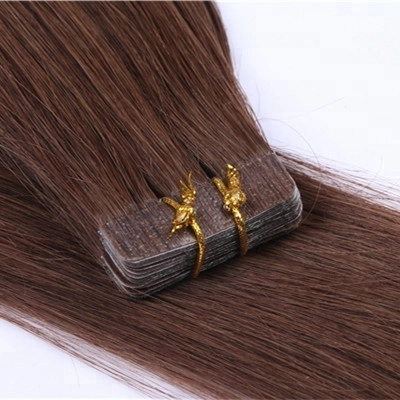
The invisible skin weft tape-in is not the correct method for every head. Its highest-value applications cluster around scenarios where concealment, lightness, or strategic placement are the limiting factors—not around maximum length in a single appointment.
Scenario 1: Fine or Fragile Hair Where Standard Bonds Are Visible or Feel Heavy. This is the defining use case for the invisible skin weft tape-in. Clients with fine or low-density hair often abandon tape-ins because the bond edge is palpable or detectable at the root. The skin weft’s ultra-thin translucent base and lighter per-weft weight (2.8 g) allow it to sit flat without the bulk that makes standard tape bonds conspicuous in fine hair. Wearer reports consistently emphasize that the bonds are “invisible” and “do not stress” fine natural hair when applied correctly—a combination that is difficult to achieve with thicker fabric-edged tape. For stylists, the invisible skin weft tape-in also offers a practical advantage in fine hair: the thinner bond requires less leave-out to conceal, preserving more of the client’s natural density for blending.
Scenario 2: Clients Who Wear Their Hair Up—High Ponytails, Top Knots, and Exposed Partings. A tape bond that looks seamless in a blowout can fail the moment the hair is gathered upward. The invisible skin weft tape-in is engineered for this scenario: because the bond is translucent and flat rather than a visible tab, it remains concealed under high ponytails and updos where standard bonds are most likely to show. Stylists place the bonds far enough from the hairline to stay hidden during movement and far enough apart to allow natural scalp movement, making the method particularly suited to clients with a defined side part or a crown-focused styling routine.
Scenario 3: Density and Fullness at the Crown Without Extending Length. Not every client wants mid-back hair. A significant segment of the invisible skin weft tape-in audience is adding volume at the crown, filling in thinning areas, or softening a visible scalp at the part—without changing their overall length. The 18-inch standard length (with 20-inch and longer options across brands) is designed for density enhancement rather than dramatic length transformation, and the 25 g / 10-piece pack format allows a single pack to be used for crown-only placement. The skin weft construction is especially effective here because the bond must disappear against the scalp at the exact area where visibility is highest.
Scenario 4: Hybrid and Strategic Installs Requiring Method Flexibility. The invisible skin weft tape-in is increasingly used as a precision component within a broader extension plan rather than as a whole-head solution. Because it is available in single-sided and double-sided formats, it can be placed at the crown or part line for invisibility while traditional tape-ins or wefts provide density through the back. Stylists also mix the invisible skin weft tape-in with Slimline or standard tapes in the same install, using the skin weft in high-visibility zones and the more economical standard tape where concealment demands are lower. This modularity allows the method to solve specific problems—a visible part, a thinning crown, a high-ponytail habit—without committing the entire head to a single bond type.
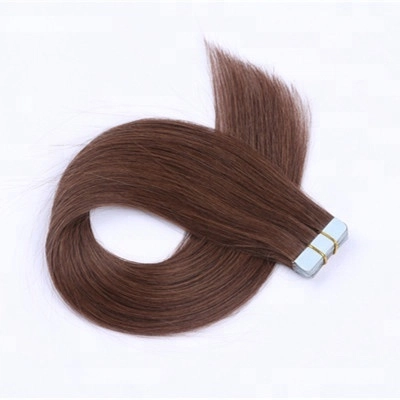
This image shows the back of tape-in hair extensions, where the "skin" (base) and the tape attachment points are visible.
The invisible skin weft tape-in is low maintenance, but not no maintenance. Its thinner bond and lighter adhesive mass mean that the maintenance rules are less forgiving than those for a heavier traditional tape-in: oils, conditioner at the root, and incomplete drying at the bond site accelerate loosening and reduce the already-compact wear window. The following protocol reflects professional aftercare guidance for skin weft tape systems and is organized around the actions that most directly determine bond integrity and hair longevity.
Step 1: Wait 24–72 Hours Before the First Wash, and Keep the Hair Down for the First Week. Fresh tape bonds need time to fully adhere. Professional guidance recommends waiting at least 24 hours before washing, with some manufacturers advising 48–72 hours for the adhesive to cure completely. During the first week, wear the hair down rather than tying it up tightly, allowing the bonds to settle flat against the scalp without added tension at the root. Avoid coloring or chemical treatment for at least 48 hours after installation.
Step 2: Wash with Sulfate-Free Shampoo and Keep All Conditioning Products Away from the Bonds. Sulfate-free shampoo is non-negotiable for tape-ins, but the invisible skin weft tape-in places an even stricter boundary around the root: conditioner, oils, heavy serums, and masks must never contact the tape tabs or the skin-weft base. Conditioner is for mid-lengths and ends only; anything oily near the bond will loosen the adhesive. Coconut oil products should be avoided entirely, and if a leave-in oil is used, argan oil applied to the ends is the safer choice. Wash gently, avoiding vigorous rubbing or tangling at the attachment points, and do not wash daily—dry shampoo on in-between days is better for both the bonds and the natural hair.
Step 3: Detangle with Controlled Support at the Root, and Never Brush Wet Hair. Work from the ends upward, holding the hair at the root area to absorb tension rather than allowing the brush or comb to pull directly against the bonds. Wet hair is more elastic and more prone to stretching at the attachment point; brushing wet extensions is a leading cause of bond slippage and natural hair stress. Use a loop brush or a wide-tooth comb, and always support the bond with the opposite hand when working through the root section.
Step 4: Dry the Bonds Completely Before Sleeping, and Protect the Install Overnight. Never go to bed with wet extensions. Moisture trapped at the skin-weft base can weaken the adhesive and compromise the thin PU membrane; the bonds and the hair must be fully dry before sleep. At night, loosely braid the hair or secure it in a soft low ponytail to prevent tangling at the nape, which in turn reduces the need for forceful detangling in the morning that can pull on the attachment points. A silk or satin pillowcase further reduces friction at the bond site.
Step 5: Keep Heat Tools Off the Roots and Bonds, and Stay Under Approximately 180°C (356°F). The hair itself can be heat-styled, but direct heat on the skin-weft bond or the tape tab accelerates adhesive failure and can distort the thin PU base. Use a heat protectant on the mid-lengths and ends, keep hot tools at a safe distance from the root, and observe the manufacturer’s temperature ceiling—around 180°C is a commonly cited professional limit for skin weft tape systems. Bleaching or lightening the extension hair is not recommended, as it has already undergone a color process.
Step 6: Attend Move-Up Appointments Every 6–10 Weeks, and Re-Tape Rather Than Replace. The invisible skin weft tape-in is designed for a 6–10 week wear cycle per application, not because the adhesive fails, but because natural hair growth moves the bond away from the scalp, making it more visible and more prone to snagging. At the move-up appointment, the set is professionally removed with an adhesive release, cleaned, re-taped, and reinstalled at the root. With proper care, the hair itself can go through up to three to four applications, supporting a total lifespan of approximately one year. Clients who schedule maintenance on time and follow the root-care rules preserve both the invisibility of the bond and the reusability of the hair—the two factors that make the invisible skin weft tape-in cost-effective relative to methods that require fresh hair at every appointment.
About This Report: This news content is based on manufacturer product documentation, professional stylist guidance, and published care protocols for invisible skin weft tape-in systems. Specifications, wear times, and aftercare recommendations vary by brand and adhesive system; stylists should confirm exact parameters with their chosen supplier and follow the instructions supplied with the specific product. For press inquiries or high-resolution images, contact the editorial desk.
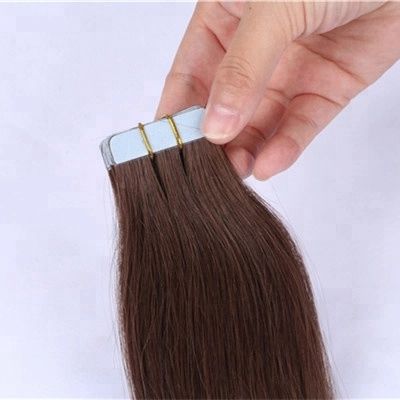
This image shows “skin tape-ins” being held in a hand for display.
The invisible skin weft tape-in represents a decisive shift in what semi-permanent hair extensions can offer the wearer who prioritizes discretion over maximum volume. By replacing the fabric edge of a conventional tape-in with an ultra-thin, translucent polyurethane membrane—and by reducing the per-weft weight to approximately 2.8 g—the method solves the problem that has long limited tape-in adoption: visibility at the root. For clients with fine or fragile hair, for those who wear their hair up in high ponytails or exposed partings, and for stylists seeking a modular solution for crown density without extending length, the skin weft bond delivers a flatter, lighter, and more natural finish than standard tape alternatives. The same design that makes the invisible skin weft tape-in discreet also makes maintenance non-negotiable: sulfate-free washing, strict separation of conditioner and oils from the bond site, complete drying before sleep, heat-tool discipline at the root, and move-up appointments every 6–10 weeks are not optional extras but the conditions under which the bond remains invisible and the hair remains reusable for up to three to four applications. In a category where the primary search intent is no longer “how long can I go” but “will anyone be able to tell,” the invisible skin weft tape-in is the method that answers the question directly—provided the wearer respects the care protocol that keeps a thin bond performing like a second skin.
Dont hesitate to Contact EMEDA Hair Factory:
 WhatsApp: +8618562611116
Email: sales02@emedahair.com