
Invisible hair extensions have become a popular choice for women who want longer, fuller hair without obvious attachment points. For professional hairstylists, salon owners, distributors, and hair extension brands, they offer an opportunity to provide clients with natural-looking hair transformations while expanding their product collections.
Unlike traditional extensions that may have thicker seams or more noticeable attachment points, invisible hair extensions are designed to lie flat against the head and blend discreetly with natural hair. They are available in several styles, including invisible tape-in extensions, invisible weft extensions, genius wefts, and seamless clip-in extensions.
But what exactly makes hair extensions invisible? Which type is best for different hair textures? How much do invisible hair extensions cost wholesale? And how can businesses find a reliable manufacturer?
In this guide, EMEDA Hair Factory explores everything you need to know about invisible hair extensions, from product construction and installation to maintenance, wholesale prices, and private-label opportunities.
Invisible hair extensions are hair extension products designed to conceal their attachment points and create a seamless transition between natural hair and extension hair.
The word “invisible” generally describes the appearance of the attachment area rather than one specific extension method. Depending on the manufacturer, invisible hair extensions may feature ultra-thin wefts, transparent adhesive strips, flat seams, or specially designed attachment structures.
Most premium salon extensions are made from 100% human hair because human hair offers natural movement, a realistic texture, and greater styling flexibility than many synthetic alternatives.
Common characteristics of invisible hair extensions include:
Invisible hair extensions are particularly popular among customers who want a natural finish for everyday wear, professional settings, special occasions, or social media content.
It is important to remember that no extension method is completely invisible in every situation. Natural hair density, color matching, attachment placement, and professional blending all affect the final result.
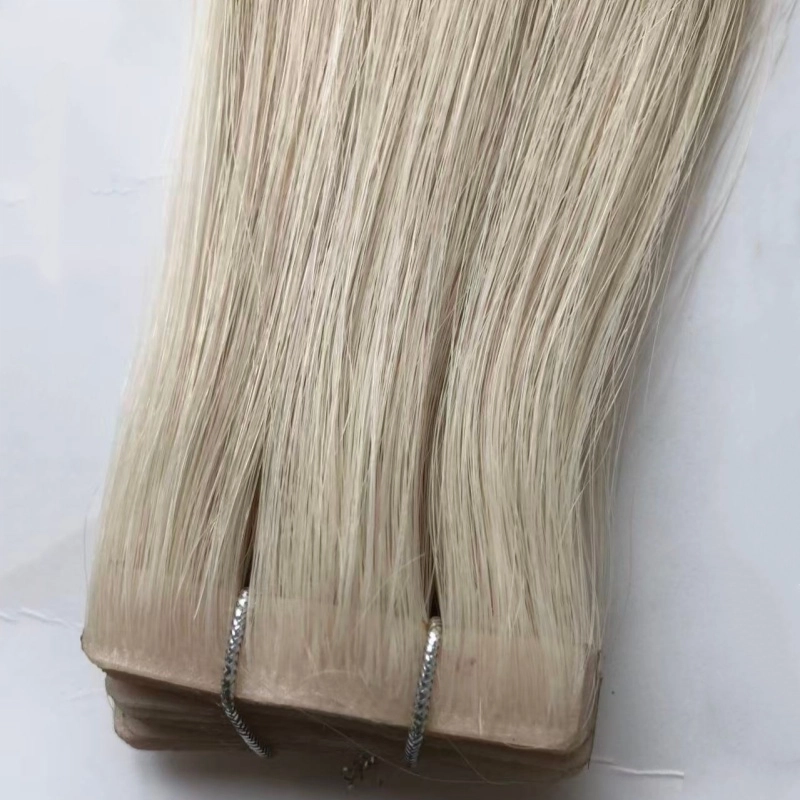
Picture shown natural invisible tape in hair with blonde color, human hair
Invisible hair extensions work by attaching additional hair to natural hair through a discreet connection method. The attachment is positioned beneath the surrounding hair so it is difficult to see during normal wear.
The process varies according to the extension type.
Invisible tape-in extensions use thin adhesive tabs. A section of natural hair is positioned between two extension tabs, creating a relatively flat attachment.
Invisible weft extensions use a thin, low-profile seam or specialized weft construction. A professional stylist attaches the weft using a suitable installation technique, often involving a beaded row or another compatible support system.
Seamless clip-in extensions use carefully designed wefts and clips that can be concealed beneath the client’s natural hair. They are removable and do not usually require permanent attachment.
Some manufacturers also describe lightweight hand-tied wefts and genius wefts as invisible extensions because their slim construction can help reduce visible bulk.
The final result depends on six important factors:
For this reason, selecting the right product is just as important as choosing an experienced stylist.
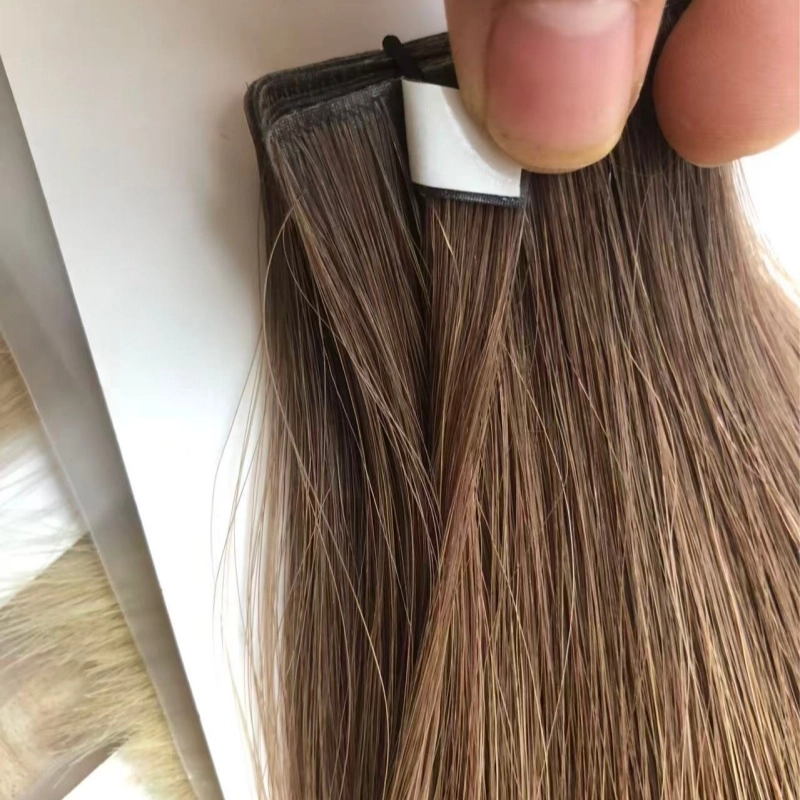
Picture shown invisible tape hair extension
Invisible tape-in hair extensions are among the most popular options for clients seeking a flat and discreet attachment.
They consist of extension hair attached to thin adhesive tabs. During installation, the stylist sandwiches a small section of natural hair between two extension pieces.
Some products use transparent adhesive, while others use specially constructed thin tabs to create a flatter appearance.
Advantages:
Invisible tape-ins are often suitable for clients with fine to medium-density hair, provided the attachment weight and placement are appropriate.
However, adhesive products require careful maintenance. Excessive oil around the tabs, unsuitable hair care products, or incorrect installation can contribute to slipping.
Invisible weft hair extensions are designed to distribute extension hair across a thin seam or low-profile attachment structure.
Compared with individual strand extensions, wefts allow stylists to install larger sections of hair efficiently. The weft is positioned beneath the client’s natural hair to keep the attachment concealed.
Invisible wefts may be installed using professional beaded-row techniques or other methods approved for the specific product.
Advantages:
Invisible weft extensions are a useful option for salons looking to offer premium extension services with a natural-looking result.
Genius wefts are designed with a thin, flexible seam that allows stylists to create customized rows.
Many genius wefts can be cut to the desired length without unraveling, depending on their construction. This can make them convenient for customized installations and different head shapes.
Their slim profile helps reduce bulk around the attachment area, which is why some suppliers market them as invisible or seamless wefts.
Genius wefts are particularly attractive to professional salons that want flexible placement and a relatively flat finish.
Before purchasing, buyers should confirm whether the specific product is cuttable and what installation techniques the manufacturer recommends.
Hand-tied wefts are made by manually tying hair onto a thin weft structure. They are valued for their slim construction and lightweight feel.
They are generally installed by trained stylists using a suitable row-based method.
When correctly selected and installed, hand-tied wefts can provide natural-looking volume while keeping the attachment area relatively flat.
However, hand-tied wefts should not be cut through the tied seam unless the manufacturer specifically permits it. Cutting an unsuitable seam can cause shedding or unraveling.
They are best suited to clients whose natural hair has enough density to conceal the row and support the selected extension weight.
Invisible clip-in hair extensions are designed for temporary use. They feature clips attached to extension wefts, allowing users to install and remove the hair without adhesive or a permanent attachment.
The clips and wefts are concealed beneath natural hair when the product is properly positioned.
Main advantages:
Clip-ins are especially convenient for customers who do not want regular salon maintenance.
However, the clips may become visible if the natural hair is too short or thin to cover them. They should generally be removed before sleeping.
Keratin bond, I-tip, and nano-ring extensions may also create discreet results when installed by an experienced professional.
These systems use small individual attachment points, allowing the stylist to distribute hair carefully around the head.
However, they are not automatically invisible simply because the bonds or rings are small. Their visibility depends on attachment size, color, placement, natural hair density, and installation quality.
What makes invisible extensions different from traditional hair extensions?
The primary difference is the design objective: invisible extensions prioritize discreet attachment and a smooth transition between natural and extension hair.
| Feature | Invisible Hair Extensions | Traditional Hair Extensions |
|---|---|---|
| Attachment design | Designed to reduce visible bulk | Varies by product |
| Seam thickness | Often thin or low-profile | May be thicker |
| Natural blending | Focuses on discreet attachment | Depends on construction and technique |
| Installation | Depends on the specific method | Depends on the specific method |
| Reusability | Possible for many products | Possible for many products |
| Price | May cost more for specialized construction | Available across many price levels |
| Best for | Customers prioritizing a seamless appearance | Customers with varied needs and budgets |
A traditional extension can also look very natural when well made and professionally installed. Buyers should evaluate the actual product construction rather than relying on the word “invisible” alone.
The most important benefit is a seamless-looking result. Thin attachment points and carefully matched colors can help extensions blend into natural hair without obvious lines or bulky areas.
Many invisible extension designs aim to reduce bulk at the roots. When the extension weight is appropriate and the installation is correct, this can improve comfort.
However, a thin seam does not automatically make a product suitable for every hair type. Excessive weight can still place stress on natural hair.
Depending on the product, invisible extensions can be styled into waves, curls, straight hairstyles, and selected ponytails or half-up styles.
Certain hairstyles may expose attachment points, so clients should ask their stylist which styles are appropriate for their installation.
Invisible extensions can help customers achieve fuller-looking hair, extend their natural length, or create a more balanced hairstyle.
They can also help blend uneven lengths and create a more polished finish.
The variety of invisible tape-ins, wefts, and clip-ins allows businesses to serve different customers.
Salons can offer professional installation services, while online brands can focus on removable products and consumer-friendly solutions.
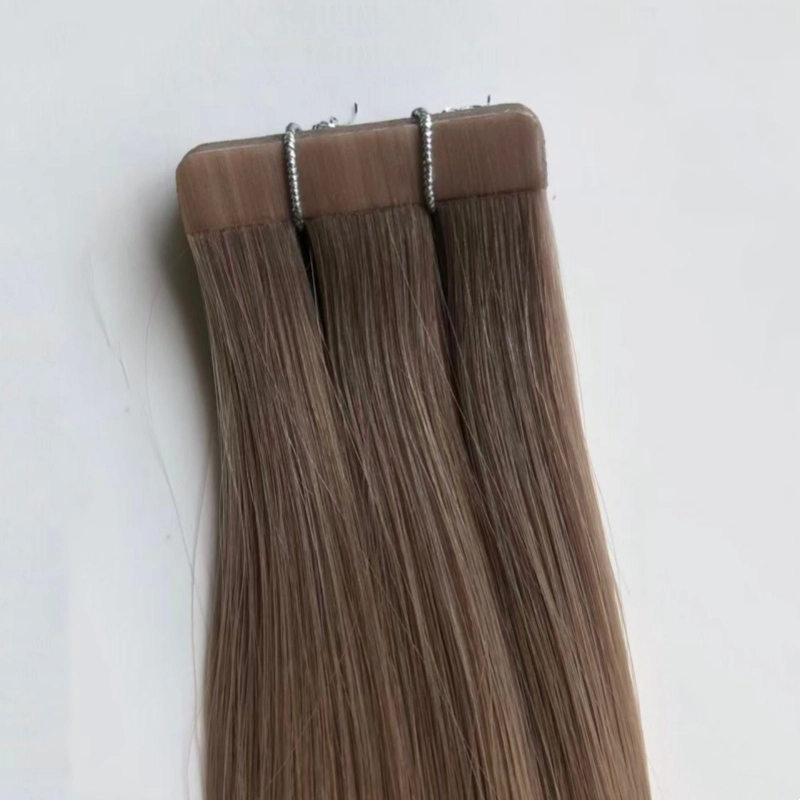
Picture shown seamless human hair extension with light brown color
Invisible hair extensions can work for some customers with fine hair, but the product must be selected carefully.
Fine hair may not provide enough coverage to conceal bulky wefts, large clips, or thick attachment points. It may also be more vulnerable to traction from heavy extensions.
For fine-haired customers, stylists should consider:
Invisible tape-ins or lightweight weft systems may be suitable for selected clients. The correct choice depends on the condition and density of the natural hair.
Customers with significant hair loss, fragile hair, scalp irritation, or active scalp conditions should seek professional advice before using extensions. Extensions should never cause persistent pain, pulling, or scalp discomfort.
Installation depends on the extension type. The following are general overviews rather than replacements for product-specific training.
Adhesive should not be placed directly against the scalp, and the stylist should avoid attaching too much natural hair to a single tab.
The finished installation should feel comfortable, without pulling or visible bulky areas.
Clip-in extensions should generally be removed before sleeping.
The lifespan depends on hair quality, construction, installation, maintenance, and how frequently the extensions are worn.
It is important to distinguish between the time an extension can remain installed and the total useful lifespan of the hair.
| Extension type | Typical maintenance or use pattern |
|---|---|
| Invisible tape-in | Often requires maintenance after approximately 6–8 weeks |
| Invisible weft | Often requires repositioning after approximately 6–10 weeks |
| Genius weft | Maintenance commonly follows a similar several-week cycle |
| Hand-tied weft | Often requires maintenance around every 6–8 weeks |
| Clip-in | Usually removed daily; lifespan depends on frequency of use |
These are general estimates, not guaranteed intervals. Hair growth, installation method, and manufacturer instructions may require a different schedule.
With proper care, quality human hair extensions can last several months or longer. Some products may remain usable for over a year, especially when worn occasionally and maintained correctly.
Synthetic extensions generally have a shorter practical lifespan, depending on their fiber quality and styling requirements.
Proper maintenance helps preserve softness, shine, and the natural appearance of the hair.
Use suitable shampoo and conditioner. Choose products compatible with the extension type. For adhesive extensions, avoid applying oily products directly to the tabs unless the adhesive manufacturer confirms they are suitable.
Brush gently. Use an extension-safe brush or wide-tooth comb. Start at the ends and work upward while supporting the hair near the attachment area.
Reduce heat damage. Human hair extensions can often be heat-styled, but excessive heat can cause dryness and reduce their useful lifespan. Follow the manufacturer’s temperature recommendations.
Dry the attachment areas. Avoid leaving installed roots or attachments damp for prolonged periods. Follow the specific care instructions for your extension system.
Avoid excessive tension. Tight hairstyles and repeated pulling can strain natural hair and attachment points.
Schedule professional maintenance. Installed tape-ins and wefts need regular inspection and repositioning when required.
Store clip-ins properly. Detangle them gently, allow them to dry completely, and store them in a clean, protected place.
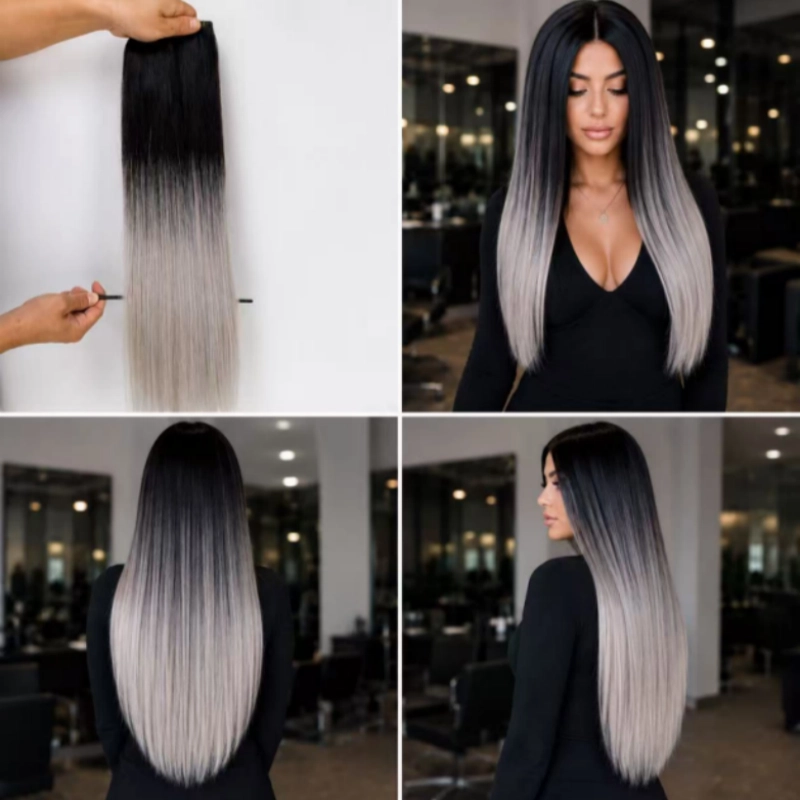
Picture shown ombre grey color double drawn invisible hair extension
Invisible hair extensions are commonly made from human hair or synthetic fibers.
Human hair offers natural movement and texture and may be suitable for professional heat styling when properly processed.
Commercial products may be described as Remy hair, virgin hair, or other human hair grades. These terms should be supported by clear supplier specifications.
Remy hair generally refers to hair arranged with the cuticles aligned in the same direction. Proper cuticle alignment can help reduce tangling, although the final result also depends on processing and maintenance.
Virgin hair usually refers to hair that has not undergone chemical processing, but definitions and verification practices can vary among suppliers.
Synthetic extensions are often more affordable and may be suitable for temporary styling or budget-conscious customers.
Their heat resistance varies. Some synthetic fibers can tolerate limited heat, while others should not be heat-styled.
For wholesale buyers, it is important to confirm the actual fiber material rather than relying on product photographs or marketing descriptions.
Hair quality affects softness, tangling, shedding, styling performance, and long-term value.
Before placing a bulk order, buyers should evaluate:
A reliable supplier should be able to explain the specifications of the product being quoted.
The wholesale price of invisible hair extensions varies according to hair quality, length, weight, color, construction, and order quantity.
For salon owners and distributors, it is essential to compare equivalent specifications. A 40 g tape-in pack should not be compared directly with an 80 g weft pack without considering the difference in weight.
The following table provides indicative wholesale budgeting ranges in USD for professional hair extension products. These are reference estimates, not guaranteed EMEDA quotations. Prices may vary by market, supplier, and product specification.
| Product type | Example pack weight | Indicative wholesale price |
|---|---|---|
| Human hair invisible tape-in | 40 g | $28–$48 |
| Human hair invisible tape-in | 100 g | $50–$120 |
| Human hair invisible weft | 80 g | $60–$140 |
| Human hair genius weft | 100 g | $80–$180 |
| Human hair hand-tied weft | 50 g | $45–$110 |
| Human hair seamless clip-in | One set | $20–$80 |
The prices above are broad planning estimates and may overlap across product categories. Longer hair, premium grades, high double-drawn ratios, blonde shades, and customized colors may cost more.
Before requesting a quotation, specify:
A precise specification helps the supplier provide a more useful quotation and makes it easier to compare offers.
For salons, distributors, and private-label brands, the order quantity can affect the unit price. Larger orders may allow more efficient production and packaging, although the actual discount depends on the manufacturer’s pricing policy and the product specifications.
The following example illustrates how a hypothetical wholesale price structure could work for a 40 g pack of human hair invisible tape-in extensions.
| Order quantity | Example price per pack | Product subtotal |
|---|---|---|
| 1–9 packs | $40 | $40–$360 |
| 10–49 packs | $36 | $360–$1,764 |
| 50–199 packs | $32 | $1,600–$6,368 |
| 200+ packs | $28 | From $5,600 |
This table is a hypothetical volume-pricing example for business planning, not an official EMEDA price list or a confirmed supplier offer.
The final wholesale price depends on the selected hair grade, length, color, attachment construction, packaging, and order requirements. Custom colors or private-label packaging may involve additional charges.
Consider a hypothetical order of 100 packs:
If the business sells each pack for $60, the gross profit before marketing, payment fees, overhead, and other selling expenses would be $23 per pack.
This example shows why businesses should calculate the landed cost rather than evaluating the factory price alone.
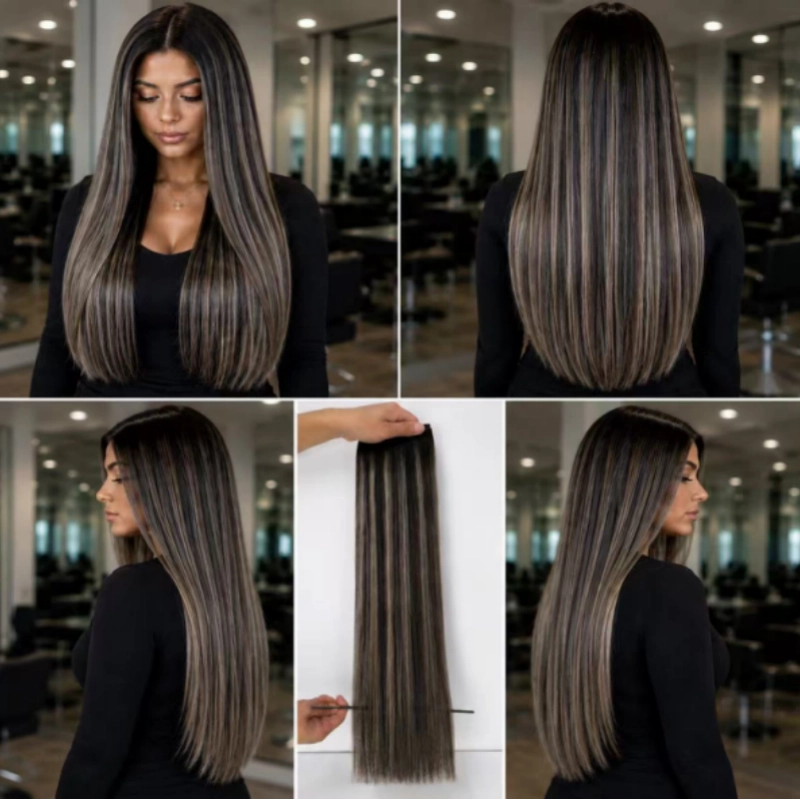
Picture shown natural look balayage color hair extension
EMEDA Hair Factory is a professional hair manufacturer in China with 20 years of hair and wig manufacturing experience. The company serves business buyers seeking hair products for salons, wholesale distribution, and private-label brands.
EMEDA’s hair extension product range includes tape-in, clip-in, machine weft, hand-tied weft, genius weft, pre-bonded, and other extension methods. Buyers can explore available products and discuss the most suitable construction for their target market.
Working directly with a manufacturer can make it easier to discuss product specifications, order quantities, packaging, and repeat-order requirements.
For wholesale buyers, EMEDA can discuss product options based on the intended application, target customer, and budget.
Businesses developing their own brands may need specific hair lengths, colors, textures, weights, or packaging.
Depending on the product and order requirements, EMEDA can discuss customization and private-label options to help businesses develop a more consistent product collection.
For hair extension businesses, consistency is essential. Buyers should establish clear acceptance criteria for hair quality, shedding, tangling, color, weight, and attachment construction.
EMEDA emphasizes quality inspection and product confirmation as part of its order process. Buyers can request available product photos or videos to review specifications before shipment.
Whether you are a salon owner testing a new product, an established distributor expanding your catalog, or a new hair brand planning a private-label launch, the appropriate starting point is a clear product specification and a quotation based on your intended quantity.
For accurate wholesale pricing, contact EMEDA Hair Factory with your preferred extension type, hair quality, length, color, weight, and order quantity.
Choosing a reliable manufacturer is just as important as choosing the product.
Ask for close-up photographs of the attachment area, weft seam, tape tabs, and finished product. Confirm what makes the product invisible rather than relying only on its name.
Sample testing helps you evaluate softness, shedding, tangling, color matching, and the quality of the attachment structure before investing in inventory.
Make sure suppliers quote the same hair grade, length, net weight, color, and construction. A lower quotation may represent a lighter pack or a different quality level.
For businesses with regular customers, consistent color, length, weight, and construction are essential. Discuss how the supplier handles repeat production and quality checks.
Confirm whether the goods are in stock or made to order, the estimated lead time, available shipping methods, and any additional charges.
Before ordering, clarify how quality concerns are documented and what procedures apply if a confirmed manufacturing issue occurs.
A reliable supplier should be able to communicate product specifications clearly and provide reasonable support throughout the purchasing process.
They are designed to make attachment points less noticeable, but no extension is completely invisible in every situation. Natural hair density, color matching, construction, placement, and styling all affect the result.
Invisible tape-ins are one type of tape-in extension. Their thinner or more discreet attachment design may help create a flatter finish, but the best choice depends on hair quality, adhesive performance, installation, and the customer’s needs.
Any extension method can damage natural hair if it is too heavy, installed incorrectly, or poorly maintained. Appropriate weight, professional installation, and regular maintenance help reduce the risk.
Many human hair extensions can be washed. The correct method depends on the attachment system, and adhesive areas should be protected from incompatible products.
Many human hair tape-in and weft products can be reused if the hair remains in good condition and the attachment components are properly serviced or replaced. Reusability varies by product.
Prices vary by material, length, weight, construction, and quantity. As an indicative planning range, human hair invisible tape-ins may cost approximately $28–$48 per 40 g pack, while invisible wefts may range from around $60–$140 per 80 g pack. These figures are estimates rather than confirmed EMEDA quotations.
Salons, distributors, and private-label brands can source invisible hair extensions from specialist manufacturers. EMEDA Hair Factory offers a range of extension products and can discuss wholesale and customization requirements.
Invisible hair extensions provide a discreet way to add length and volume while maintaining a natural-looking hairstyle. Popular options include invisible tape-ins, invisible wefts, genius wefts, hand-tied wefts, and seamless clip-ins.
The best product depends on the client’s hair density, styling preferences, maintenance expectations, and budget. For wholesale buyers, understanding the attachment construction, hair quality, pack weight, and total landed cost is essential when comparing suppliers.
EMEDA Hair Factory welcomes inquiries from salons, distributors, and private-label brands interested in exploring hair extension products and wholesale cooperation.
Contact EMEDA Hair Factory to discuss your invisible hair extension requirements and request a quotation based on your target specifications.
Dont hesitate to Contact EMEDA Hair Factory:
 WhatsApp: +8618562611500
Email: sales11@emedahair.com