
Keratin hair extensions occupy a peculiar position in the extension hierarchy: they are simultaneously the most natural-looking option available and the one that demands the most from the wearer — in time, money, and maintenance discipline. Unlike clip-ins that snap in over a coffee, or tape-ins that move up every six weeks, keratin bonds fuse strand by strand to the natural hair using the same protein hair is made of. The result is movement so seamless that stylists describe it as “hair that moves the way hair actually moves”. The trade-off is a three-to-five-hour install, a $600-plus starting price, and a removal process that cannot be rushed, skipped, or done at home.
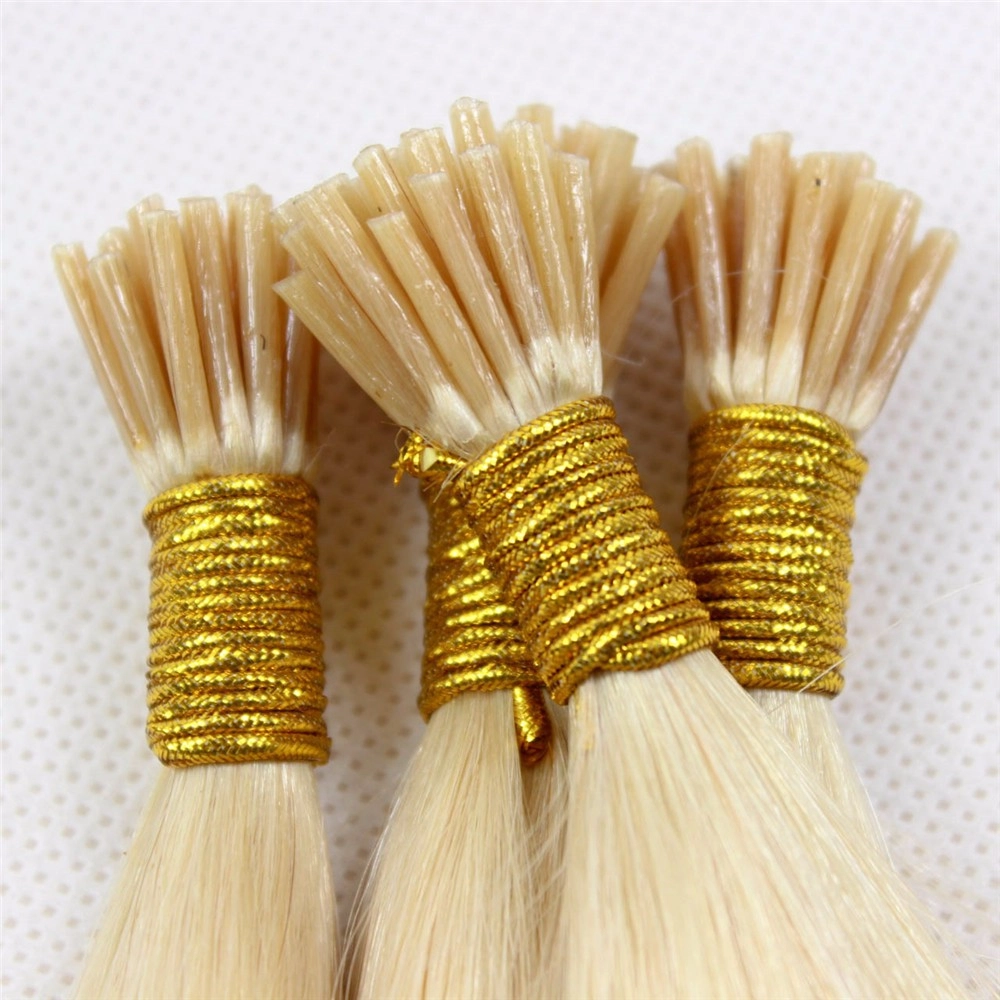
Picture shown the details focused on the root of Keratin hair extensions.
Keratin hair extensions — also called K-tips, keratin bonds, or fusion extensions — are a semi-permanent method in which individual strands of extension hair, pre-tipped with a keratin protein bond, are fused to small sections of the wearer’s natural hair near the root. The keratin at the tip of each extension is softened with a low-heat tool and moulded around the natural strand, creating a molecular attachment that is strong, flexible, and virtually undetectable at the scalp. Because the bond is made from keratin — the same structural protein that forms human hair — the attachment moves with the natural hair rather than sitting on top of it, which is why keratin bonds are consistently ranked by stylists as the most advanced and natural-looking method on the market. The category includes U-tips (melted and rolled around the hair for maximum hold), I-tips (attached with a micro-bead rather than heat, though the term “keratin tip” is often used loosely), and flat-tips (rectangular bonds that sit flush against the scalp for the most undetectable finish).
The defining feature of keratin extensions is that every bond is individual. There is no weft, no track, no panel — only small sections of extension hair fused one by one to corresponding sections of natural hair. This architecture produces a quality of movement that panel-based methods cannot replicate: the hair swings, parts, and falls exactly as natural hair does, because each strand operates independently. It also means keratin bonds can be placed in areas where wefts and tapes cannot go — near the hairline, at the parting, in fine side sections, even in bangs — because the bond can be cut down to a fraction of a gram and hidden in spaces too fragile for a larger attachment.
Keratin bonds are the least detectable extension method available, but they are also the slowest and most labour-intensive to install. A full head typically takes 1.5 to 3 hours, and premium salons quote up to five hours for a meticulous strand-by-strand application. The Marie Claire guide to K-tips frames the cost-benefit bluntly: keratin extensions are a $1,500-and-two-hours proposition for a full transformation, compared with tape-ins that install in under an hour. The premium buys discretion — but it is a premium in both money and time.
Keratin bonds deliver the longest single-install wear time of the semi-permanent methods: 3 to 5 months before a move-up or full removal, depending on hair density and aftercare. However, the extension hair is not reusable in the way tape-ins are. The keratin bond is consumed or degraded during removal, and reusing the hair requires a re-tipping process in which the old bond is cut off and a new keratin tip is applied — an additional cost and service that many wearers choose not to repeat. The economic reality is that keratin extensions are a repeat-purchase method, not a repeat-use method.
Because each bond is independent, keratin extensions allow a degree of colour and density customisation that panel methods cannot match. A stylist can blend multiple shades strand by strand to match balayage, multi-tonal colour, or early greys — something tapes and wefts cannot do because they arrive as pre-coloured panels. The same strand-level control allows the stylist to adjust weight distribution: a 0.5-gram mini bond for a fine side section, a 1-gram bond for a denser crown area, all within the same install.
Keratin bonds perform best on fine-to-medium hair with normal scalp oil levels. Fine hair benefits from the strand-level weight distribution and the ability to place tiny bonds close to the hairline. But very oily scalps are a documented problem: sebum breaks down the keratin bond over time, causing the extension hair to shed prematurely, and wearers with oily roots may find the method “hard work” to maintain. Very fragile or thinning hair also requires caution — a stylist must assess whether the natural strands can support the planned weight, and thinner-haired clients are often advised to cap wear time at three months to avoid excess tension as bonds grow out.
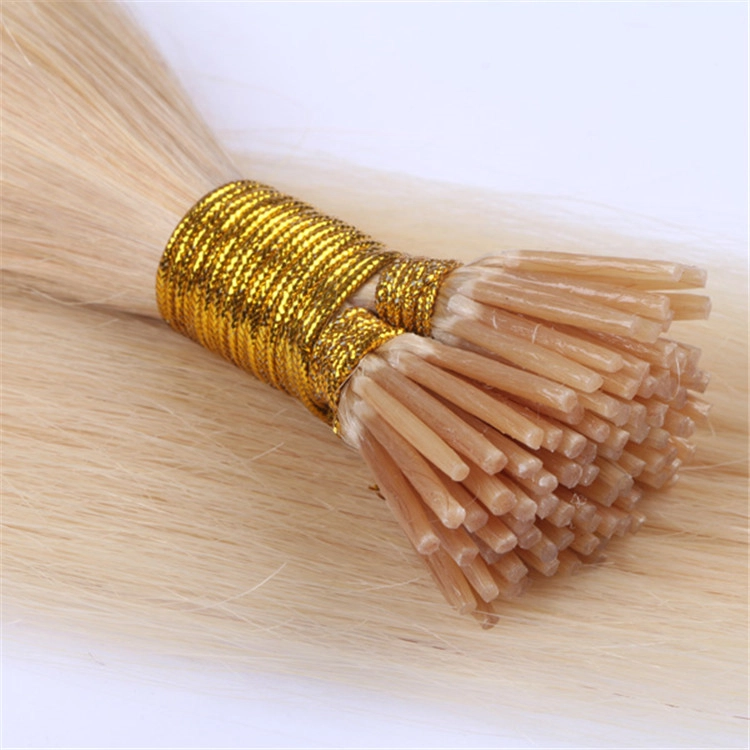
Picture shown the details focused on the root of Keratin hair extensions.
| Specification / Design Feature | Typical Range / Details | Corresponding Benefits |
|---|---|---|
| Bond Type: U-Tip (Hot Fusion) | U-shaped keratin tip melted and rolled around natural hair | Strongest possible hold; best for medium-to-thick hair; maximum discretion when applied skillfully |
| Bond Type: Flat-Tip | Rectangular keratin bond, sits flush against scalp | Flattest, most undetectable profile; excellent comfort; suitable for all hair types, especially fine hair |
| Bond Type: I-Tip (Micro-Bead) | Keratin-tipped strand secured with a silicone-lined micro-bead, no heat | Zero heat exposure; best for clients seeking no chemical or thermal processing; slightly more visible than fused bonds |
| Bond Weight Per Strand | 0.5g, 0.8g, 0.9g, 1.0g; mini bonds down to ⅓ gram (“pearl bonds”) | Lighter bonds for hairlines and fragile areas; heavier bonds for density and volume in stronger sections |
| Length | 8–30 inches available; salon stock commonly 18–22 in.; 24 in. by special order | 18–20 in. for natural-length blending; 22–24 in. for visible length transformation; 24+ in. for dramatic effects |
| Strands Per Pack | 20 strands per pack (common); 25-strand and 50-strand formats also available | Predictable gram-weight per pack; simplifies full-head calculations and hybrid fill-in orders |
| Full-Head Quantity (Fine Hair) | 4–6 packs / 80–120g | Adequate fullness without overloading fine strands; stylist can distribute weight strategically |
| Full-Head Quantity (Medium Hair) | 6–8 packs / 120–160g | Balanced density and length; the most common full-head range for average hair |
| Full-Head Quantity (Thick Hair) | 8–12 packs / 160–240g | Maximum coverage and volume; required when natural hair density is high and extension hair must match |
| Installation Time | 1.5–3 hours (standard); up to 5 hours for premium strand-by-strand work | Reflects labour intensity; the time premium is the price of strand-level invisibility |
| Wear Duration | 3–5 months per install; 3 months recommended for fragile/thin hair | Longest semi-permanent interval between salon visits; reduces frequency of full reinstalls |
| Reusability | Not reusable without re-tipping; old bond cut off and new keratin applied | Hair can be salvaged with a re-tipping service, but this is an added cost and not standard practice |
| Ideal Hair Type | Fine-to-medium hair with normal oil levels; caution with oily scalps and active thinning | Strand-level weight distribution suits finer hair; oily scalps degrade bonds faster; thinning hair requires professional density assessment |
| Heat Styling Limit | Up to 160°C / 320°F; avoid concentrating heat on bond sites | Allows curling and straightening to blend with natural texture while protecting the keratin attachment |
| Removal | Professional only; bond remover gel/spray + removal pliers; 30–60+ minutes | Prevents natural hair breakage; improper removal is the primary source of damage with this method |
Keratin bonds are frequently positioned as the best professional option for fine hair — not because fine hair is easy to extend, but because the bond can be scaled down to a size that larger attachment methods cannot match. A ⅓-gram pearl bond at the hairline, or a flat-tip bond that sits flush against the scalp, adds fullness without the detectable ridge of a tape panel or the bulk of a weft. The caveat is that fine hair and thinning hair are not the same problem: fine strands may be perfectly strong enough to support bonds, while thinning density means fewer strands to distribute the added weight. The method suits the first scenario far better than the second.
Tape-ins and wefts impose styling limits. A weft installed in a beaded row can make a high ponytail or a tight top-knot feel lumpy or expose the attachment; a tape panel can create a visible edge when the hair is parted differently. Keratin bonds remove those constraints. Because every bond is independent and micro-sized, the hair can be worn up, down, parted anywhere, slicked back, or braided without revealing an attachment point. For clients who change their hairstyle daily — or who simply refuse to let their extensions dictate how they wear their hair — this is the category’s strongest practical argument.
Once the keratin bond has cured, it is water-resistant. Keratin-bonded extensions are explicitly rated as swimming- and exercise-friendly, distinguishing them from tape-ins (which can slip with oil and moisture) and clip-ins (which must be removed before showering). A wearer can swim, sweat through a workout, and wash their hair without the bond losing its grip — provided the aftercare protocol is followed. For clients whose lifestyle includes regular gym sessions or swimming, keratin bonds offer a durability profile that other methods struggle to match.
The strand-level architecture makes keratin bonds the only semi-permanent method that can truly colour-match complex hair. A stylist working with balayage, ombré, or scattered grey can select individual strands in multiple shades and blend them precisely into the natural colour pattern, rather than ordering a panel that approximates the overall tone. This is especially relevant for clients who have invested in dimensional colour and do not want extensions that read as a single flat block of colour against their natural hair.
For clients who want the longest possible gap between salon appointments, keratin bonds deliver 3 to 5 months of wear — compared with 6 to 8 weeks for tape-ins and move-up cycles for wefts. This suits wearers who travel frequently, have scheduling constraints, or simply prefer a “set it and forget it” rhythm. The qualification is scalp oil: an oily scalp will shorten the bond’s effective life, so the long-interval benefit is realistic only for clients whose scalp condition supports it.
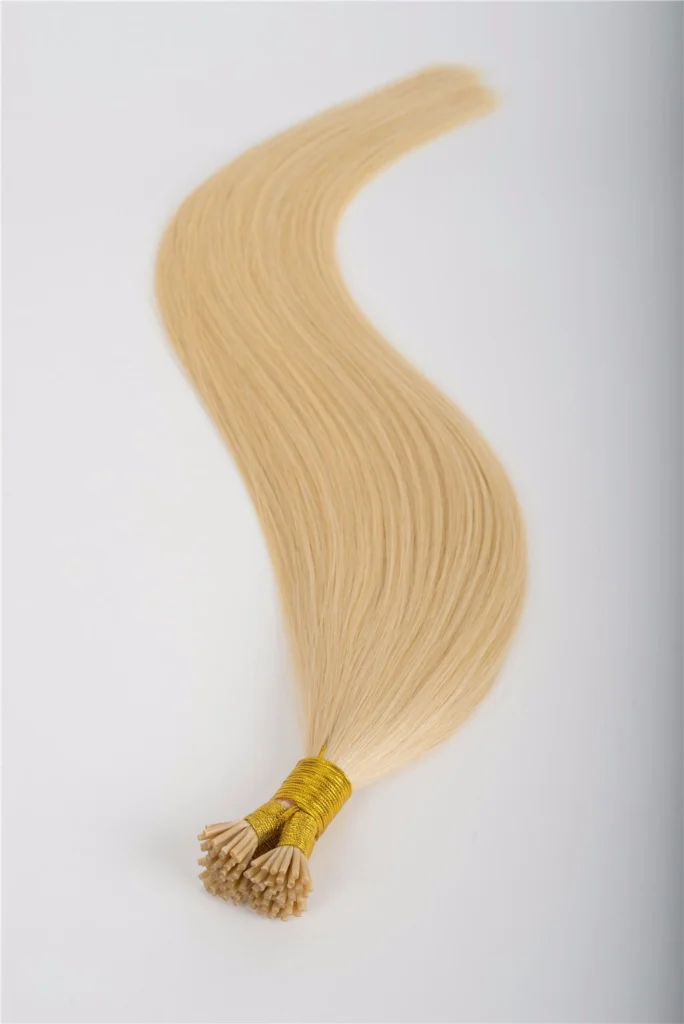
Picture shown whole view of blonde Keratin hair extensions.
The keratin bond does not reach full strength immediately after installation. The first 48 hours are a curing period during which the keratin re-crystallises and secures its grip on the natural hair. Washing, sweating heavily, or exposing the bonds to steam during this window can compromise the attachment before it has set. This single rule is the most important post-install instruction, and it is non-negotiable.
Keratin bonds are degraded by two things: sulfates and mechanical agitation. Sulfates break down the keratin glue; scrubbing motions at the root loosen the bonds and create friction that can cause matting. The correct technique is to work shampoo from the top down in a vertical motion, letting the product run through the lengths rather than piling the hair on the scalp and scrubbing. Conditioner should be applied from the mid-shaft to the ends, never directly on the bond sites. A sulfate-free, pH-balanced shampoo is not a preference — it is a requirement.
Keratin bonds can be styled with heat, but the bond itself is heat-sensitive. Curling irons and straighteners should be kept on a low setting and should not be concentrated on the attachment points; the safe ceiling for the extension hair is generally around 160°C / 320°F, and the bonds themselves should be treated as off-limits for direct high heat. A heat protectant spray should be applied before any thermal styling. The risk is not subtle: excessive heat can melt the bond and cause the extension to slip or fall out.
The correct detangling sequence is ends first, then mid-lengths, then roots — the opposite of how many people instinctively brush. A loop brush or extension-specific brush should be used, and the hair should be held above the section being brushed to prevent traction on the bond sites. Brushing from the root downward on bonded hair pulls directly on the keratin attachments, which is the fastest way to loosen them and stress the natural hair.
Oils and heavy styling products weaken the keratin bond by degrading the adhesive interface between the bond and the natural hair. Lightweight, oil-free styling products are safe on the mid-lengths and ends, but anything applied near the root should be checked for oil content. This is particularly important for wearers with naturally oily scalps, whose sebum alone can shorten bond life.
Keratin extensions cannot be safely removed at home. The bond must be softened with a dedicated remover gel or spray, then gently compressed with removal pliers and slid out — not pulled, not crushed, and not dissolved with household solvents. Improper removal is the primary source of natural hair damage associated with this method; the bond is strong enough that pulling it off can take natural hair with it. Professional removal typically costs $50 to $250 depending on location and volume, and it is not a step where cost-cutting is advisable.
If the wearer intends to reuse the extension hair, the old keratin must be cut off and replaced with a fresh tip before reinstallation. This is a salon service, not a DIY task, and it adds to the total cost of ownership. Many wearers choose to purchase new hair at each install rather than re-tip, which makes keratin extensions a higher lifetime-cost method than tape-ins or clip-ins. The honest framing is that keratin bonds are a premium-experience purchase, not a budget-optimisation strategy.
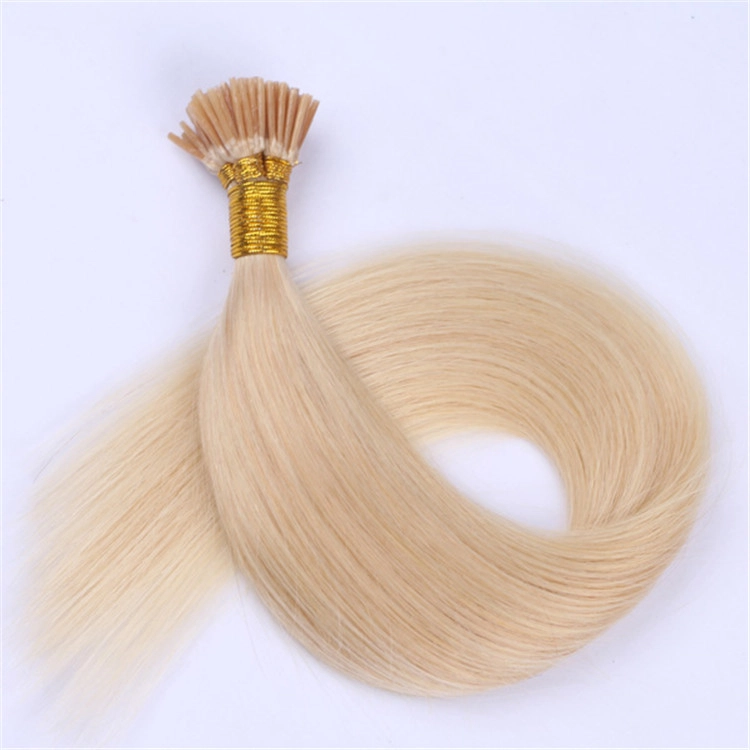
Picture shown whole view of blonde Keratin hair extensions.
The global hair extension market was valued at approximately USD 1.66 billion in 2025, with projections reaching USD 2.59 billion by 2032 at a compound annual growth rate of 6.8%. Keratin-bonded extensions sit at the premium end of that market: they command the highest install price, the longest appointment time, and the most demanding maintenance protocol, but they deliver the natural-movement and undetectability profile that stylists consistently rank above tape and weft alternatives. The method’s growth constraint is not demand — it is practicality. A wearer must be willing to commit to a multi-hour install, a 48-hour no-wash window, a sulfate-free and oil-aware product regime, and a professional removal appointment that adds $50–$250 to the cycle. For the client whose priority is the most invisible, most natural-feeling extension available, those costs are the price of admission. For everyone else, the market offers faster, cheaper, and more forgiving alternatives — which is precisely why the extension category continues to fragment rather than consolidate around a single “best” method.
Keratin hair extensions occupy the premium end of the semi-permanent extension market, and they earn that position on one metric above all others: undetectability. Strand-by-strand fusion produces movement, parting flexibility, and updo freedom that tape panels and wefts cannot replicate, and it is the only method that can be colour-matched strand by strand to complex dimensional colour. For fine-haired clients, active lifestyle wearers, and anyone who refuses to let extensions dictate how they style their hair, keratin bonds deliver a level of realism that justifies the category’s reputation.
Contact EMEDA Hair today with your preferred lengths, colors, weights, and estimated order quantity to request a customized wholesale quotation and sample options.
Dont hesitate to Contact EMEDA Hair Factory:
 WhatsApp: +8618562611116
Email: sales02@emedahair.com